If the doomscrolling is out of control, it’s time to put the phone down and do something productive. You can go on a hike, discover cool stuff at the local library, or learn CPR — otherwise known as cardiopulmonary resuscitation, a simple but critical procedure involving chest compressions that anyone can learn 👍
⚕️ Why is CPR Important?
Every moment counts during cardiac arrest or another medical emergency when someone is unconscious, has no pulse, or isn’t breathing (or is struggling to gasp for breath). CPR helps ensure that oxygen-rich blood continues to pump through the heart and reach the brain, keeping the victim alive.
🫀 What Are the Steps of CPR?
- Call 9-1-1.
- Send someone to fetch an AED (Automated External Defibrillator) if one is nearby.
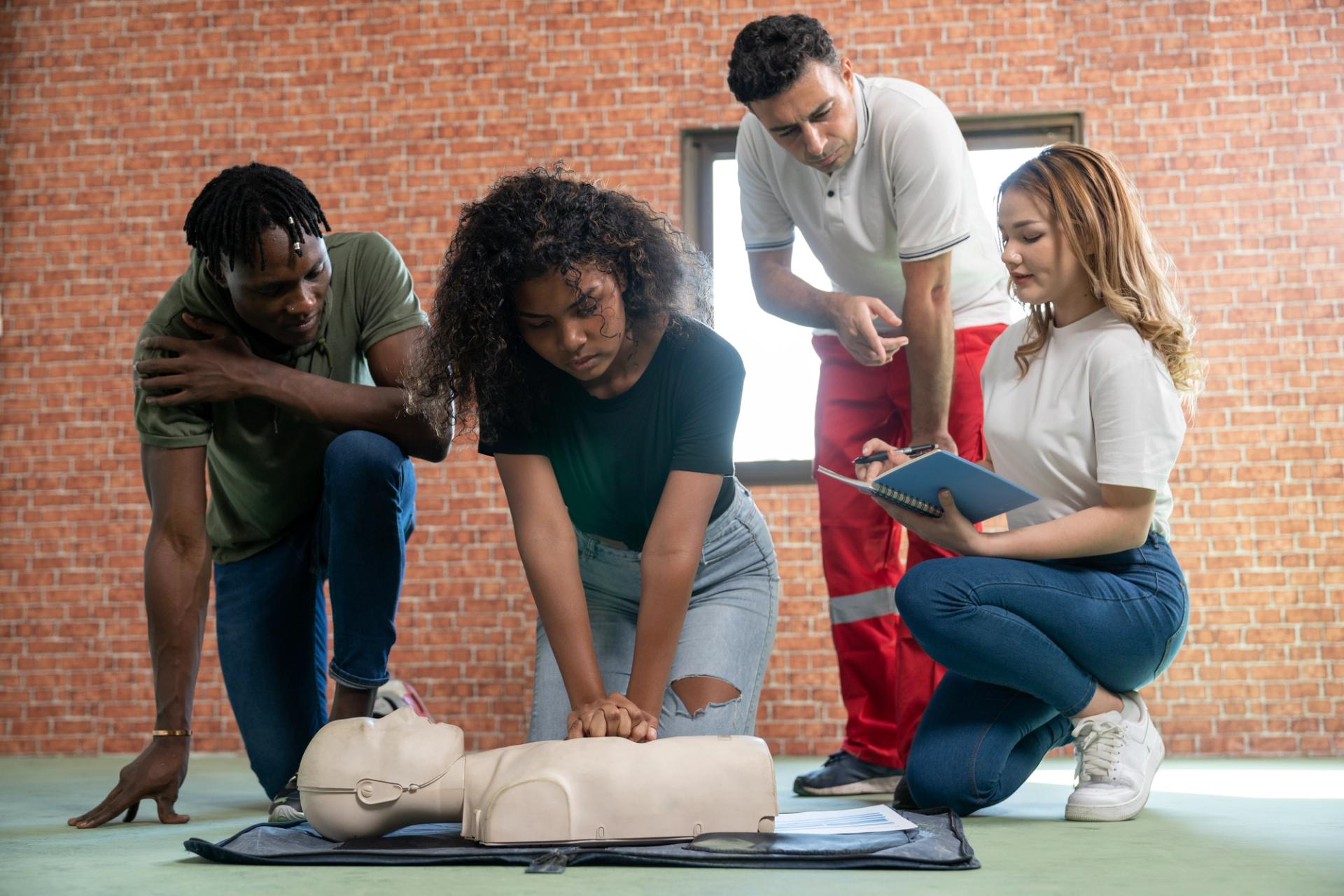
- Begin performing CPR — one hand over your other hand, pushing down hard and fast on the center of the victim’s chest. How fast? Experts say 100-120 beats per minute is ideal, which also happens to be the pace of “Staying Alive” by the Bee Gees 🕺
- If an AED arrives, activate it and follow the instructions. It’s designed to guide you in a clear manner in high-stress situations. The 9-1-1 operator will provide direction too.
- If an AED isn’t available or doesn’t work, continue to perform CPR until medical help arrives. If you get tired, another person can step in and continue the hand compressions. Continue to rotate as needed.
👄 What About Mouth-to-Mouth?
While the process of breathing into someone else’s mouth to stimulate resuscitation is still taught to medical professionals, it’s now generally discouraged among the wider general public. One reason is uncertainty about viruses or illnesses that can be transmitted. (First responders may have a protective mouth piece to use.) Another is that it’s difficult to do properly on the spot — prompting uncertainty and hesitation — and it’s better to act quickly and focus on hands-only CPR.
👀 How To Learn CPR in Las Vegas
A quick 90-second video can teach the basics of learning CPR. It’s better than nothing, but not the same as taking a certification course, which can be found with the help of the following resources:
Most of these courses will also cover how to perform CPR on an infant, familiarity with using an AED, and other basic first aid skills. While it’s unlikely you’ll ever have to perform CPR, it’s a skill you’ll be grateful to have mastered when a life-or-death situation arises.