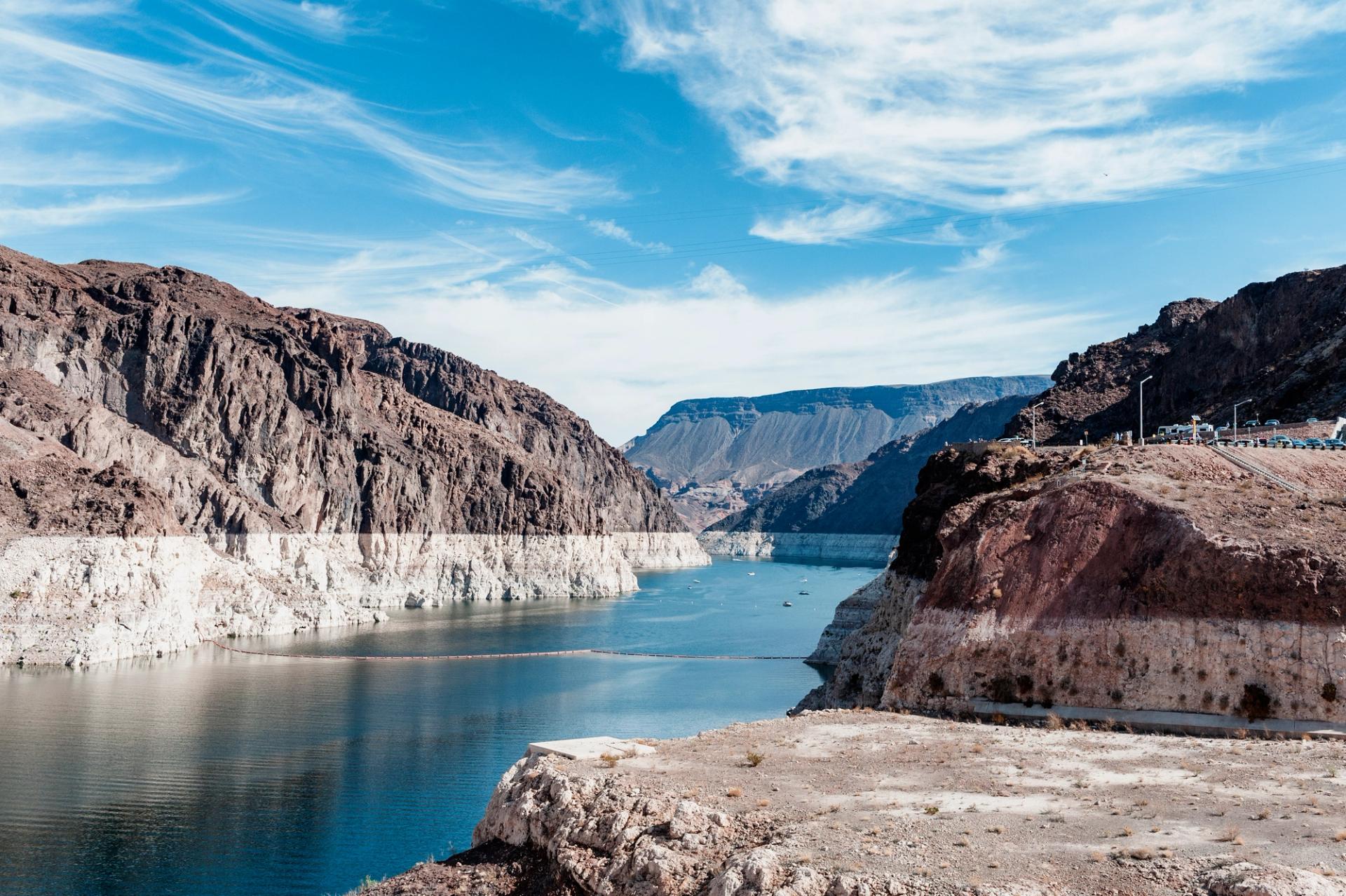
It’s hard to ignore the headlines about water levels at Lake Mead dropping to historic lows. We’ve written a few of them ourselves. The idea of a desert city running out of its drinking supply is a frightening one. Could it really happen?
🚰 Where Does Las Vegas Get Its Water From?
Historically, the water supply was drawn from natural springs and aquifers, attracting native tribes, pioneers, and travelers on the Old Mormon Trail. The water wasn’t enough for a growing community, though. The construction of the Hoover Dam on the Colorado River created Lake Mead, which became the main water source for Southern Nevada. Today, about 10 percent of the supply is from groundwater.
🏜️ How Important is the River?
The Colorado River begins in the Colorado Rockies and flows 1,450 miles through seven states and down the center of the Grand Canyon before emptying into Mexico’s Gulf of California (although it doesn’t always make it that far). Unfortunately, heavy water use and excessive drought in the Southwest have taken its toll.
😨 What Happens if Water Levels Get Too Low?
If water levels continue to drop, Lake Mead could reach dead pool status, which means the water won’t be strong enough to flow downstream or generate power. At last check, Lake Mead’s water level is around 1,062 feet. It would have to drop to 895 feet to become a dead pool.
💧 How Do We Prevent This?
The Southern Nevada Water Authority has been working with state and local governments on extensive conservation initiatives, including bans on new lawns, ornamental grass, and larger swimming pools. Thanks to extensive recycling programs, we can still keep cool stuff like the Bellagio fountains while earning the praise of late-night host John Oliver, who said “Vegas could actually be a model for other places when it comes to water conservation.”
🏡 Do Seasonal Home Restrictions Really Help?
Actually, yes. Water for lawns and gardens can’t be recycled like it does when flowing through the pipes, so please pay attention to the latest notices.
🫢 What if it Gets … Bad?
Nevada uses far less water from the Colorado River than California and Arizona, whose agriculture industries guzzle up much of the supply. Those farmers would likely face restrictions before a city like Las Vegas loses what it needs to survive. Other drastic ideas have been discussed — like doing away with the Glen Canyon Dam in Northern Arizona — to free up the flow of the river. But we’re a long way from anything like that from happening.
✂️ And About Those Water Cuts?
The Interior Department is now issuing annual restrictions of the Colorado River at the federal level with 2025 guidelines announced last week. Nevada will “lose” 7% — the same as last year, but we use less than our allotment already, putting us ahead of the curve. It’s a status quo situation. For now.
Confused? Most of us are. That’s why City Cast Las Vegas co-host Dayvid Figler spoke to environmental reporter Daniel Rothberg about the conflicting headlines and what the long-term prognosis is for water in Southern Nevada. [City Cast Las Vegas 🎧]