
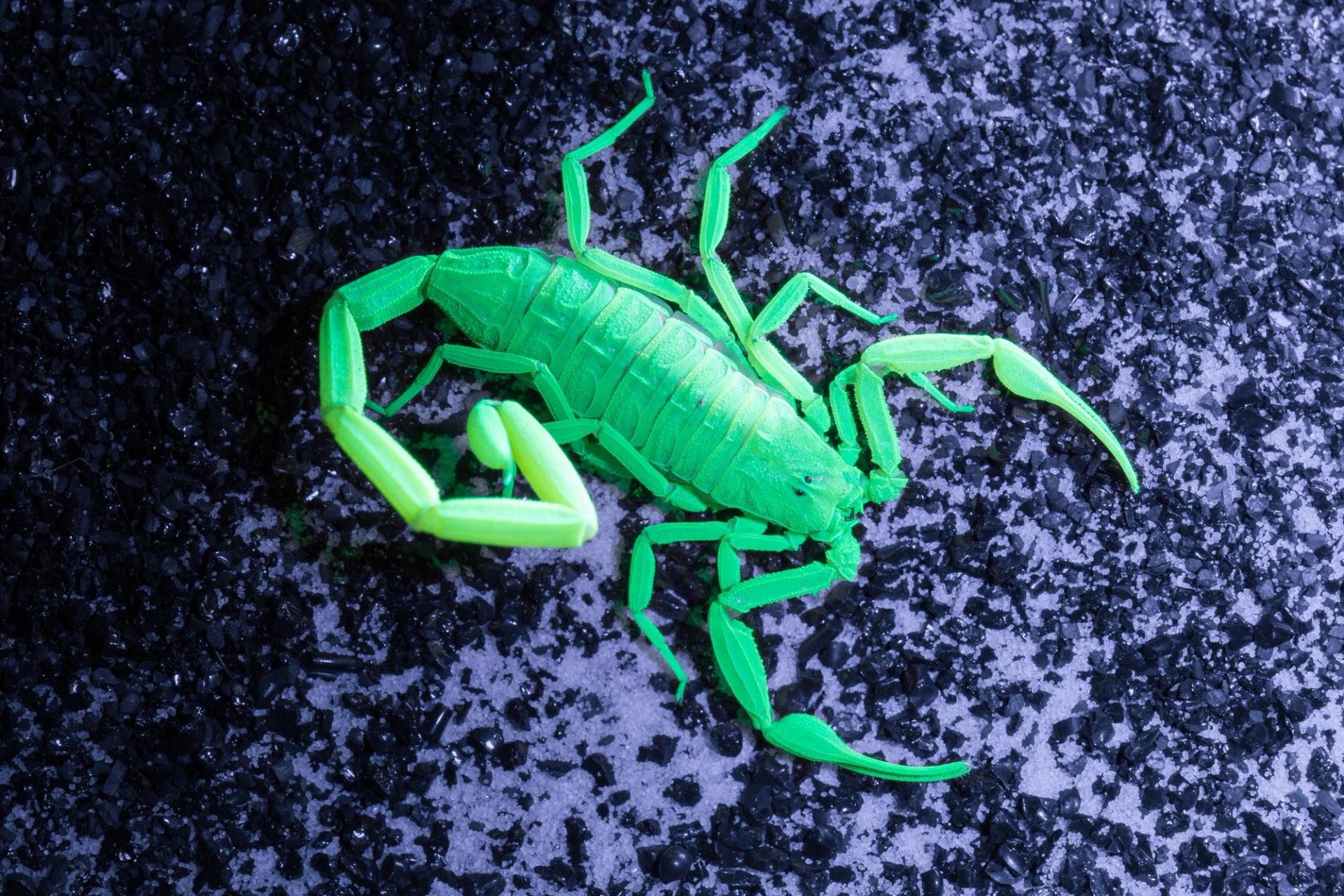
You have to wonder what hellish tranche of natural selection the scorpion had to pass through such that two scissor hands and a poison-dart tail were its survival adaptations. Plus an exoskeleton! As it happens, scorpions might be the oldest land creatures still around — 420 million years ago they were among the first sea organisms to adapt to life ashore. They’re resilient, tough enough to survive a nuclear war, and, if necessary, can live for a year on the nutrition of a single bug.
There are 1,500 varieties worldwide, and about two dozen in these parts. Of them, the 2-3-inch Arizona bark scorpion (Centruroides exilicauda) is the most venomous — the most venomous in the U.S., in fact. A sting can be quite painful, and symptoms usually last 24-72 hours, but generally only the allergic, elderly, or very young are in real danger. (Good thing, since the antivenin can deliver a sting of its own — to your finances.)
They’re not entirely bad, of course. Scorpions help control cockroaches, crickets, spiders — they even eat other scorpions, including their own offspring. And the toxins in their venom have shown medicinal potential in treating certain cancers, parasites, and autoimmune disorders.
Given their survival moxie, it’s no surprise they're hard to get rid of. “No pesticide we use will ever make them go away,” a pest-control guy once told the Review-Journal. The consensus best strategy is to focus your pest-control on eradicating the scorpions’ food supply. Then maybe they’ll move on. Merry Christmas, neighbor!