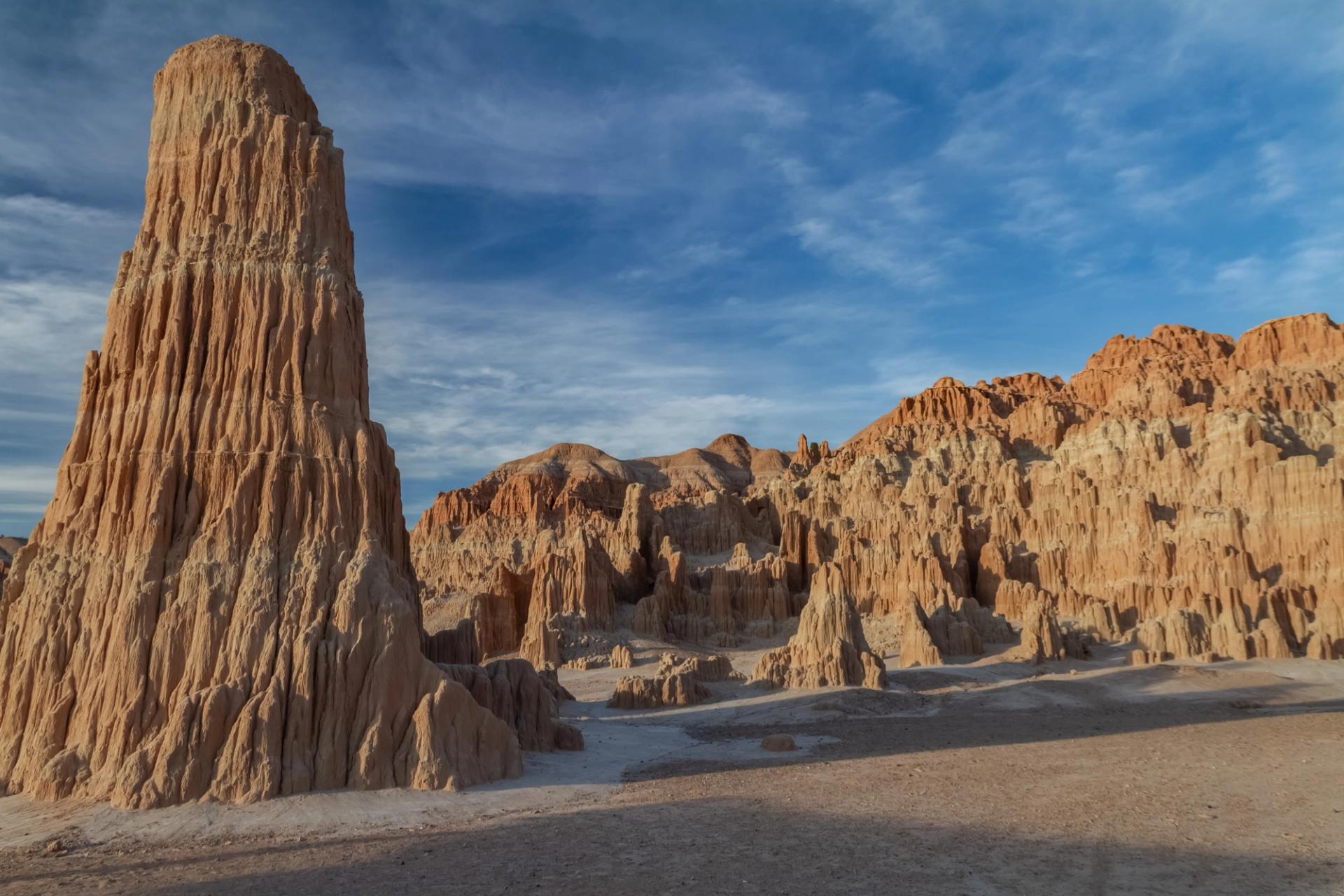
Hoodoos are a staple of Southwest desert scenery, but aren’t always easy to define. The name is kind of a catch-all term for irregular rock formations that change and evolve due to wind, rain, snow, and other forms of natural erosion.
🌊 How are Hoodoos Made?
It helps to remember that most of North America was underwater millions of years ago. As the waters receded, plateaus eroded with softer rock wearing away more quickly than harder rock. Holes or “windows” can form before evolving into tower-like formations and eventually wearing away into something of a stump. But that takes centuries to happen.
👁️🗨️ Where Can I Find Hoodoos?
Bryce Canyon National Park in Southern Utah is known for having the largest concentration of hoodoos in the world. Closer to home, Cathedral Gorge State Park in Panaca is almost like a mini-Bryce Canyon with a valley of hoodoos mixed in with slot canyons. Beaver Dam State Park is a little different with white hoodoos formed by volcanic activity. You’ll also see varying, less-dramatic forms of hoodoos at the Valley of Fire State Park (especially in the northern part of the park near Duck Rock) and maybe even a few mushroom-shaped rock formations that fit the category at the Red Rock Canyon National Conservation Area.