
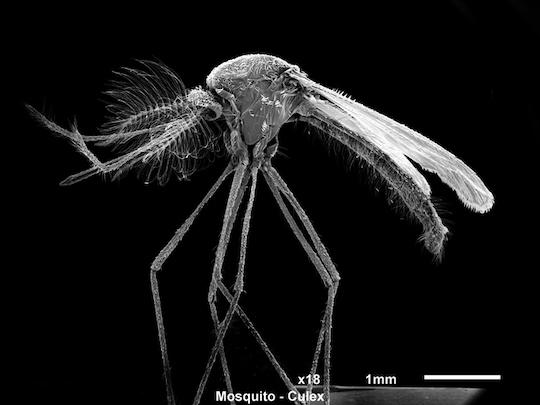
If you were a mosquito in Las Vegas during the Great Recession, you were living your best bug life, even if it only lasted 4-8 weeks. Among the tens of thousands of foreclosed and abandoned homes were many neglected, green-slimed, algae-choked pools and spas that made this party central for you. Indeed, mosquitoes became such a rapidly hatching nuisance back then that local health officials actually plopped egg-eating fish — Gambusia affinis, often called the “mosquito fish” — into the green goop pits to help curb the population. (Their handlers even hung “Fish at Work” signs on some gates.)
Thanks to the wet winter, could we be looking at another larger-than-normal mosquito problem this summer? There are some who say yes, though we’re still waiting to hear back with confirmation from the Southern Nevada Health District.
Actually, “nuisance” is probably the wrong word. Mosquitoes are known disease vectors, particularly with the Zika and West Nile viruses. In 2019, health officials found infected mosquitoes in 40 local ZIP codes.
Fun fact: It’s pregnant female mosquitoes that do the biting and blood-sucking. (Thirteen of the 17 varieties of mosquitoes that live here are biters.) They’re active in the mornings and evenings — but they really start jonesing for blood a couple hours after sundown. They’re drawn by the carbon dioxide in your breath, and studies suggest that they prefer type O blood over type A, though not B or AB.