Written by City Cast editor Adrian González.
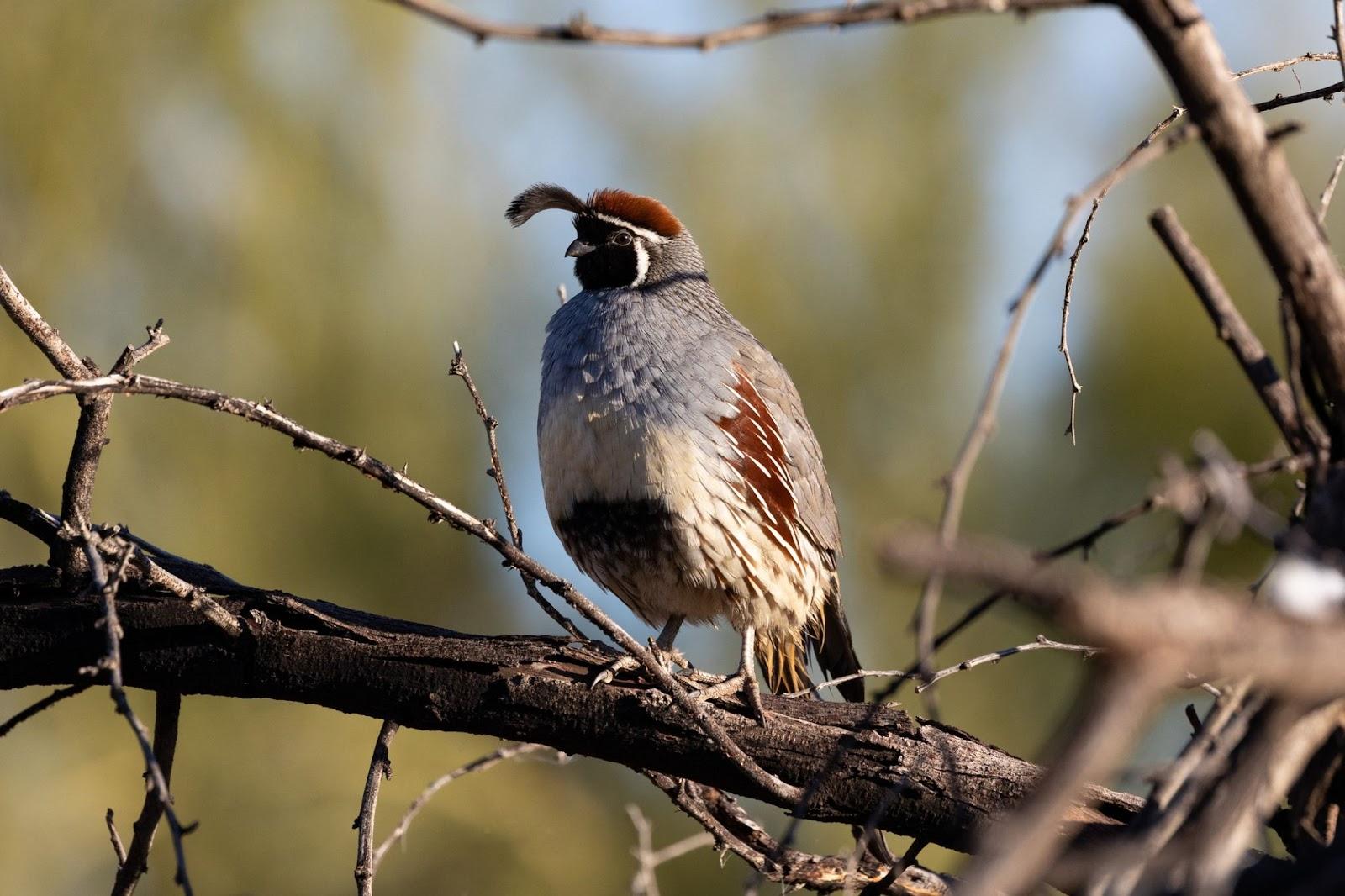
Visit the nearest watering hole in the Mojave or Sonoran Desert (that’s nature’s kind, not the ones with adult human beverages) and you’ll likely spot a covey of Gambel’s Quail. These winged creatures play an important role in the desert’s ecosystem, and they do it with a very stylish hairdo.
Gambel’s Quail help control insect populations by consuming a variety of insects like grasshoppers, beetles, and caterpillars. They’re also a food source for other animals, as well as a popular target for hunters.
How to Spot Gambel’s Quail
Like most in the avian world, male Gambel’s quail are more flamboyant than their female counterparts. They sport a larger topknot and a reddish cap — female quail sport mostly-gray feathers with small bronze stripes.
A ground-dwelling bird, quail will collectively forage for food during the day and roost in dense areas like bushes at night.
Dance With the One That Brought Ya
Let me lead with the most adorable anecdote: Gambel’s Quail are monogamous, meaning that they mate with a single partner for life. During courtship, males will perform a series of head bobs, loud caws, and feather puffing to find a suitable mate. Once paired up, they’ll spend a period of time searching for good nest sites — typically near the ground on shrubs or abandoned nests from other birds.
Mating season is typically between March and September, depending on weather and habitat conditions. In Las Vegas, they can typically be found foraging in groups with newly-hatched chicks during the summer months. They’ve adapted to growing urban environments, so you can sometimes catch them foraging in your yard.
Although populations rise and fall annually, Gambel’s Quail are labeled as “low concern,” the most stable conservation status, according to the IUCN Red List of Threatened Species. If you come across them in your birding adventures, please send us pictures!