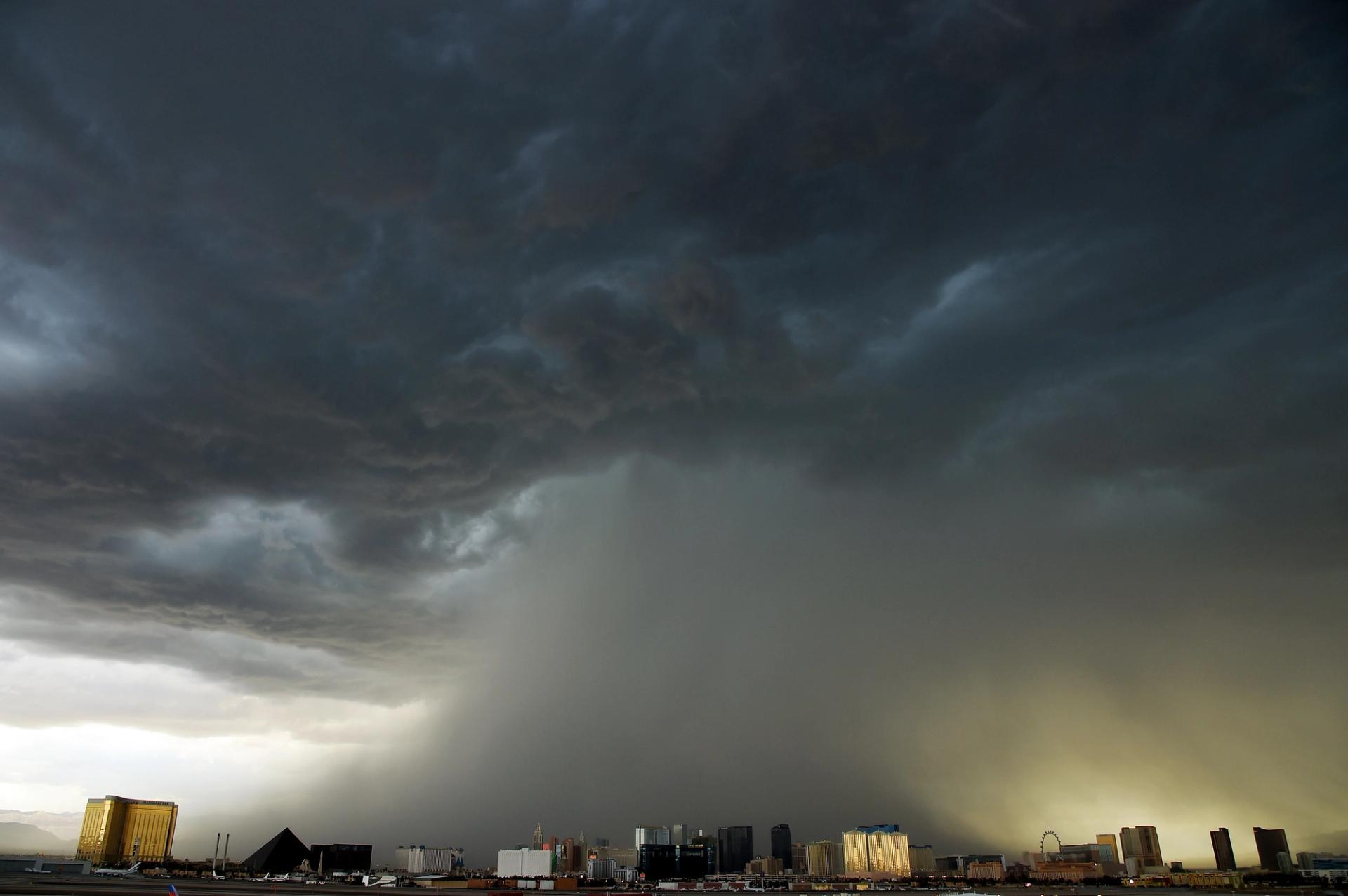
You may have noticed — the grey skies are back, signaling the return of monsoon season in Las Vegas. A chance of showers or even thunderstorms becomes greater as the week goes on. Just remember, floods can emerge at any given moment. The more you understand the weather, the better prepared you’ll be.
🌧️ When is Monsoon Season in Las Vegas?
Monsoon season typically runs anywhere from late June to mid-September in Southern Nevada. As usual, you can blame the heat. As land warms up in summer, the rising hot air creates a vacuum. This attracts moisture-heavy air from the Pacific Ocean, forming unstable clouds that develop into thunderstorms.
🧐 How is This Year Shaping Up?
This year’s monsoon season is expected to be more active than usual — although it would be tough to top 2023, when Tropical Storm Hilary boosted rainfall in western states. Since then, the Regional Flood Control District has made significant upgrades in basins, channels, and storm drains to guide floodwaters away from congested areas and toward Lake Mead. Road work on Charleston Ave. in the Arts District includes a new storm drain to help reduce flooding.
⚡ Is Monsoon Season Dangerous?
Yes, it can be. Drought-stricken land and the lack of lush vegetation make it difficult for the environment to absorb water. Vegas roads are notoriously slick when it rains. That’s because oils and dust collect on the asphalt during periods between rainfall, becoming slippery when water finally arrives.
⛈️ How Bad Does it Get?
Some years are worse than others. Nine people were killed during a 1974 flood in El Dorado Canyon in 1974. Flooding in 1999 was the worst on record with the most inches and more than 200 swift-water rescues, although flooding in 2012 was nearly as bad.
🚘 What About The LINQ Garage?
Flooding in the The LINQ parking garage is caught on camera for dramatic news footage every year, but it’s actually supposed to be that way. The first floor was intentionally designed as a diversion tunnel for the Flamingo Wash, since water couldn’t pass through the property’s already-built foundation (back when it was under construction as the Imperial Palace).
👍 How to Stay Safe
No matter who’s honking behind you, resist the temptation to drive into flood waters. As little as 18 inches is enough to carry your car away. Keep homes well-stocked in case a thunderstorm causes the power to go out. Speaking from personal experience, having a few bags of ice handy makes a world of difference when the A/C stops working in the middle of a heat wave.