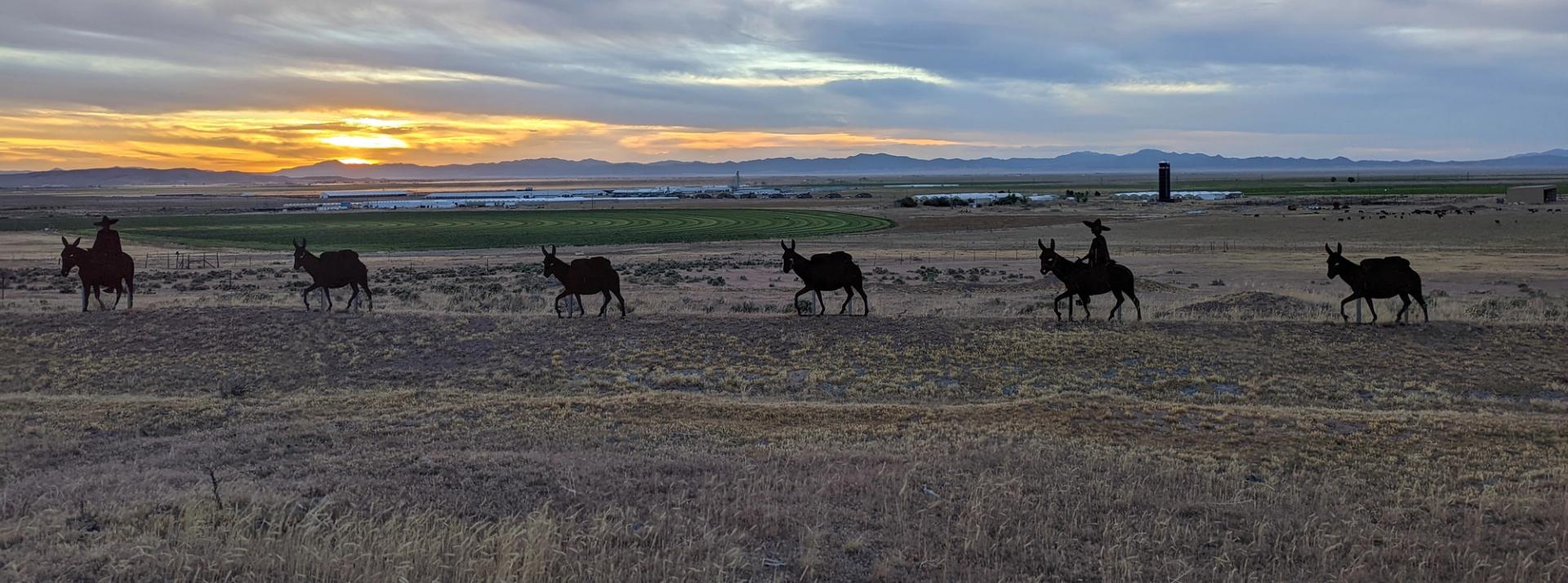
The journey to Las Vegas follows many paths — especially one that shaped our community in a pivotal way. The Old Spanish Trail connected Santa Fe and Los Angeles, splintering off into different routes that passed through Arizona, New Mexico, Colorado, Utah, Nevada, and California. It was a vital part of trade between Spanish territories from 1829 to the mid-1850s.
The origins of the trail date back much further, combining paths used by Indigenous tribes over hundreds of years before colonists discovered them. “This was only a horse and mule trail. You could not take wagons on it. It was much too rough,” says Josef Diaz, curator of history and material culture at the Nevada State Museum, Las Vegas. “Over time, an easier trail was established a little further south, so the Old Spanish Trail became obsolete.”
The Old Spanish Trail was pivotal in transporting a variety of goods, especially horses and mules raised in the California mission communities and prized in other areas of the Southwest. The trail also carried luxury items from Asia that were delivered at the ports. Textiles and pine nuts traveled in the opposite direction from Santa Fe.
The trail had a dark side. Utes, who were astute on horseback, rounded up slaves from among the Southern Paiute and Navajo tribes, and sold them off to Spanish travelers. “There was a human trade going on, which isn’t really looked at and discussed much,” Diaz says. “ The Spanish used them as household servants in their homes in California and New Mexico.”
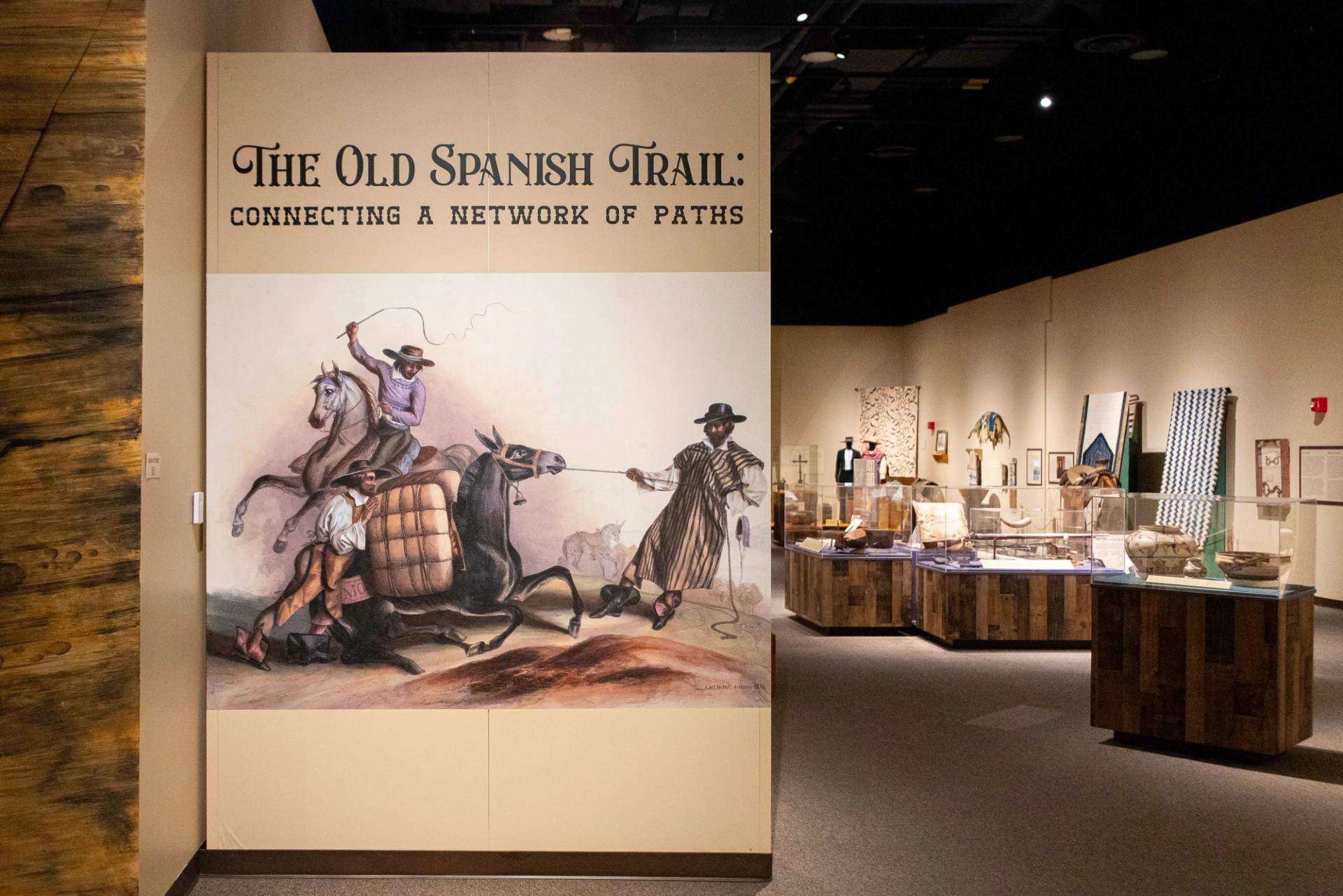
An exhibit extends its run. (Nevada State Museum, Las Vegas)
One of the main stops on the trail was in Las Vegas, where the Springs Preserve stands today. It was a much more lush environment back then with grass and abundant water, named Las Vegas (Spanish for “the meadows”) by scout Rafael Rivera.
“Really, the story of Las Vegas starts at the Springs Preserve,” Diaz continues. “It’s the reason why Las Vegas was established.”
The Nevada State Museum Las Vegas just extended its current exhibit on the Old Spanish Trail through July 7. “It talks about all the different items that were traded, life on the trail, what people ate, how they spent their free time and evenings around campsites, playing music with their violins.”
- City Cast Las Vegas spoke further with Josef Diaz about the history and legacy of the Old Spanish Trail in a special episode. [City Cast Las Vegas 🎧]