There was a time when archaeology was about more than confiscating relics while looking good in a slouch hat, and paleontology didn’t primarily involve collecting ancient DNA for your dinosaur theme park. They were about gathering knowledge to illuminate the past.
Both disciplines began turning their attention to Southern Nevada’s Tule Springs areas early in the last century, after the 1903 discovery of teeth and bones in sedimentary rock. Decades of study and exploration followed.
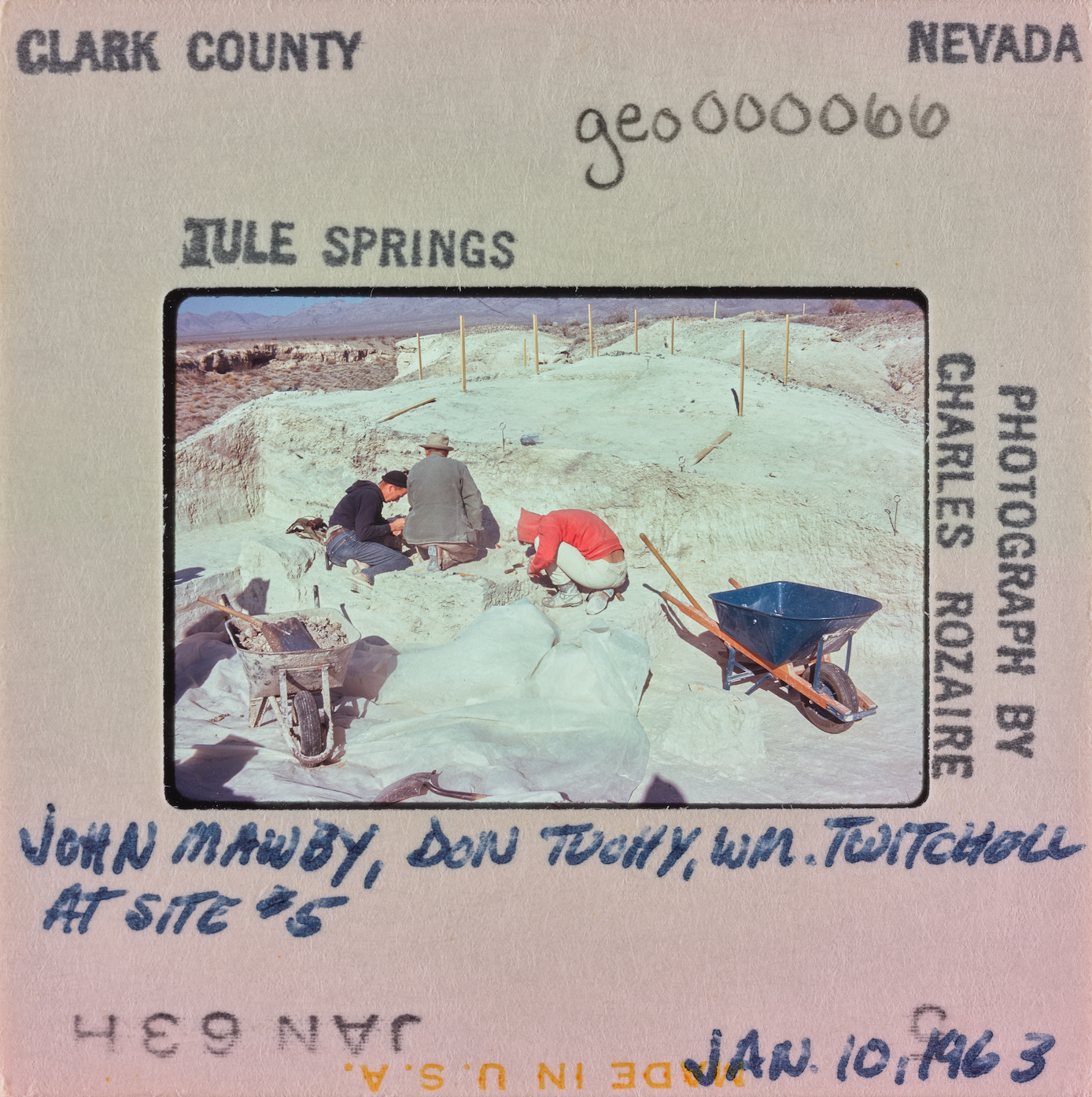
The years 1962-63 saw a concerted, multidisciplinary effort to gouge understanding from the ground. Colloquially known as the Big Dig — thanks to the heavy equipment used to trench into the site — it was meant to “determine if humans and Pleistocene megafauna coexisted.” Big was the precisely right word, too: According to the Review-Journal, the research team “moved 200,000 tons of dirt and dug trenches miles long and 30 feet deep.” The excavations exposed deep strata, which were then subjected to radiocarbon dating on a scale previously unattempted.
The conclusion? Based on artifacts (no human remains were found), it seems prehistoric folks appeared on the scene well after the big critters. With that, interest in the site waned until the 2000s, when further study revealed the rich fossil resources buried around Tule Springs — large mammals (saber-tooth cats, dire wolves, bison, sloths, horses, camels, and a whole lot of mammoths), frogs, lizards, snakes, birds, even snails and clams. But research is ongoing, and scientists are still on the lookout for evidence that humans and megafauna coexisted.
Fast-forward to now: Ice Age Fossils State Park opened on Saturday, 61 years and 10 days after the photo above was taken — our newest state park, honoring some of our oldest resources. Click below to hear park supervisor Garrett Fehner tell City Cast Las Vegas co-host Dayvid Figler all about the park, its features, and its historical importance. Then go check it out — just leave any fossils where you find them!