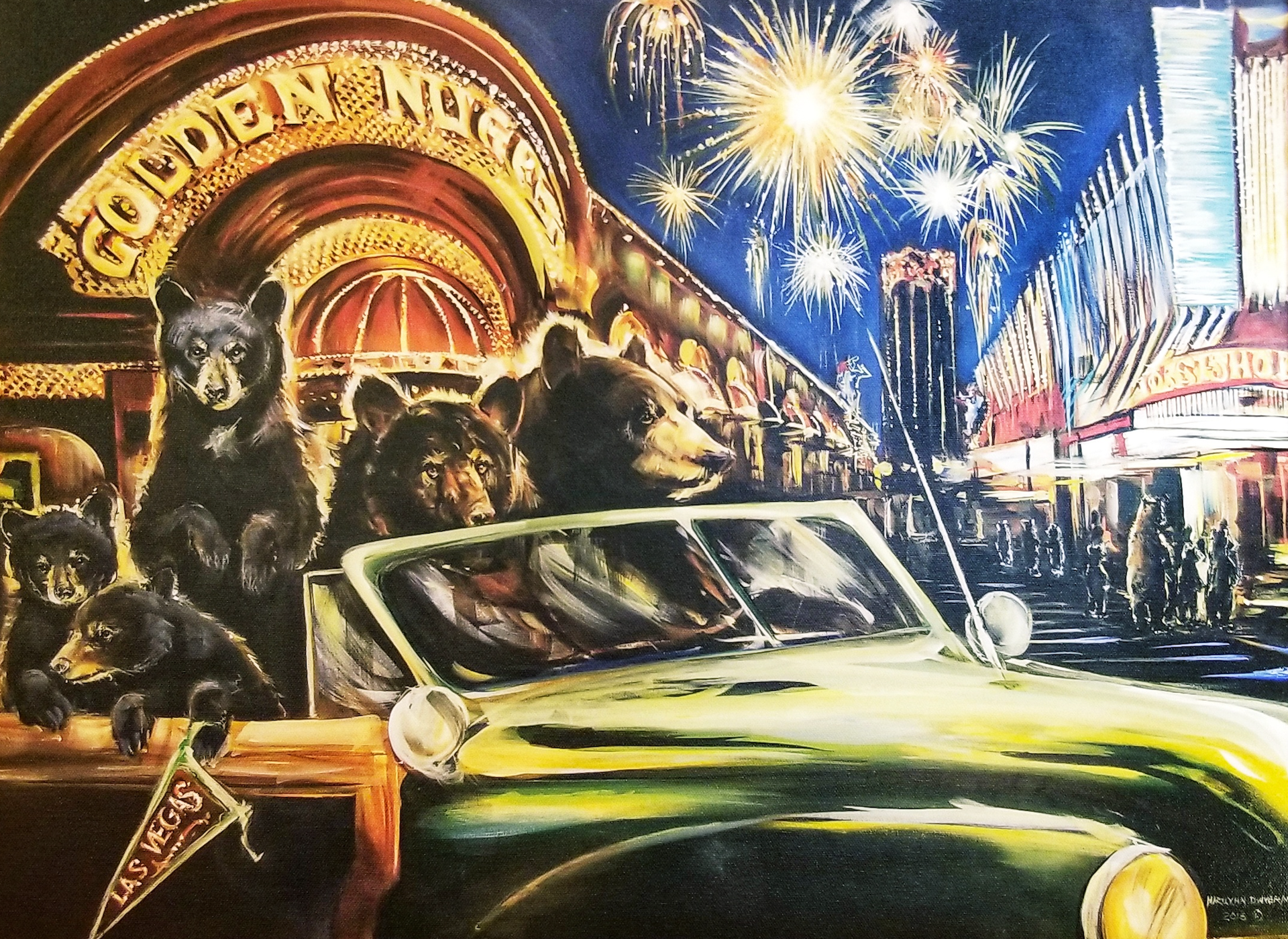
As of next week, the Fremont Street Experience will have been open for 28 years. So here’s a shout-out to the time before that, receding deeper into memory every day, when anyone — including, it seems, a carload of Ursus americanus on a pre-hibernation toot — could drive down Glitter Gulch for an immersion in classic Las Vegas.
That began to change in the early 1990s, as the Strip, energized by the Mirage and the onset of the megaresort era, began siphoning off downtown’s clientele. Before, “80% of the people who came to Las Vegas made at least one trip to see Fremont Street,” says former mayor Jan Jones Blackhurst. “By 1989, 1990-91, those numbers had flipped so that less than 20% were coming downtown.”
The area was said to need a super-size entry in the “experience economy” to avoid being decimated. And because modern Las Vegas’ best practices dictate that you can solve any problem by throwing spectacle at it, a bonkers videodome became the solution (a frankly better one than Steve Wynn’s proposal to replace downtown streets with canals).
And the view from the skyboxes is that it worked. “We turned it around with the Fremont Street Experience,” casino owner Bill Boyd told author Geoff Schumacher for his book “Sun, Sin & Suburbia.”
But “turned it around” has a different meaning to those Vegas longtimers who still mourn the raffish, human-scaled, uncapped Glitter Gulch, and for whom the modern Fremont just doesn’t bear comparison.
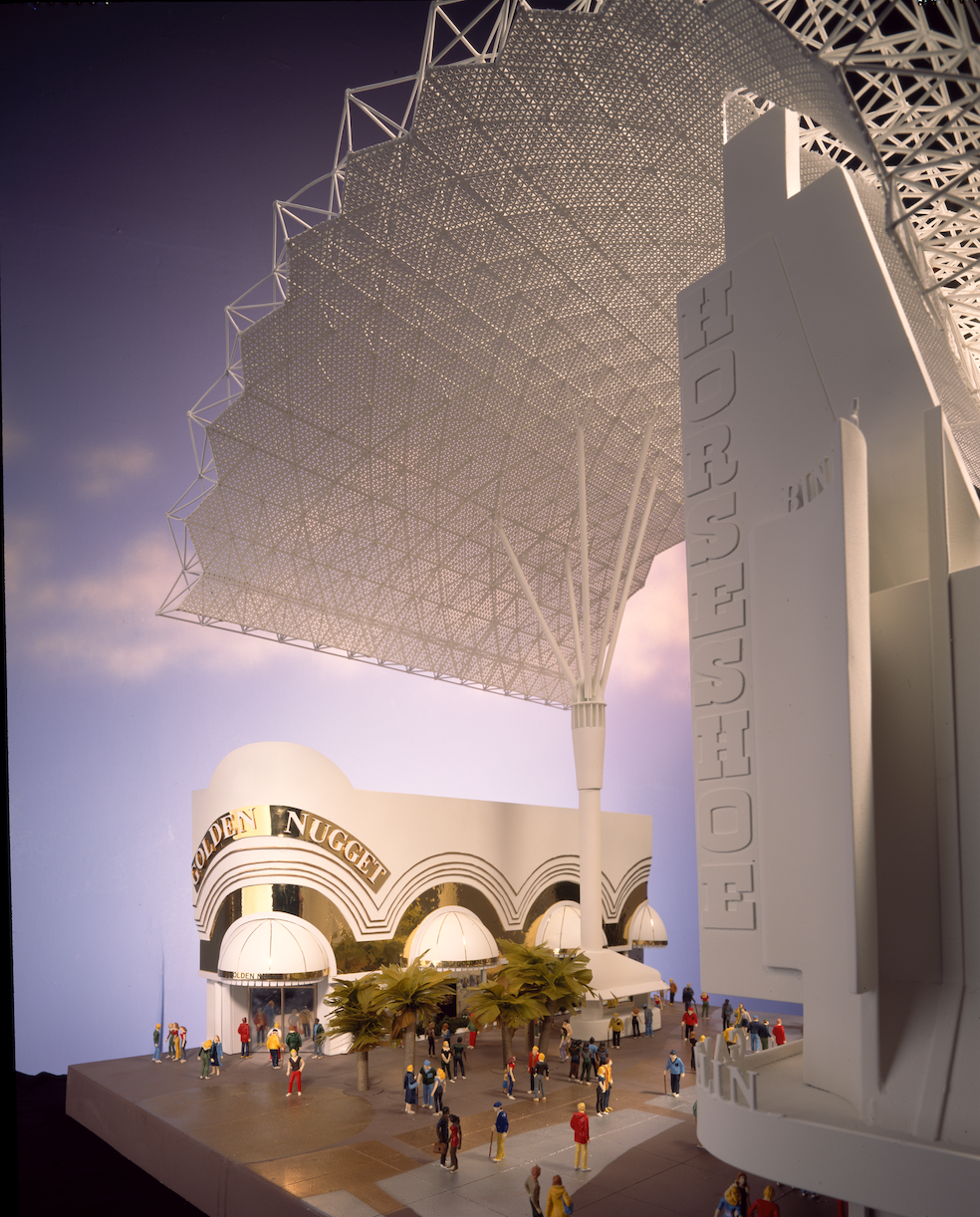
Model of the Fremont Street Experience, circa 1994. (Greg Cava Photograph Collection/UNLV Special Collections and Archive)