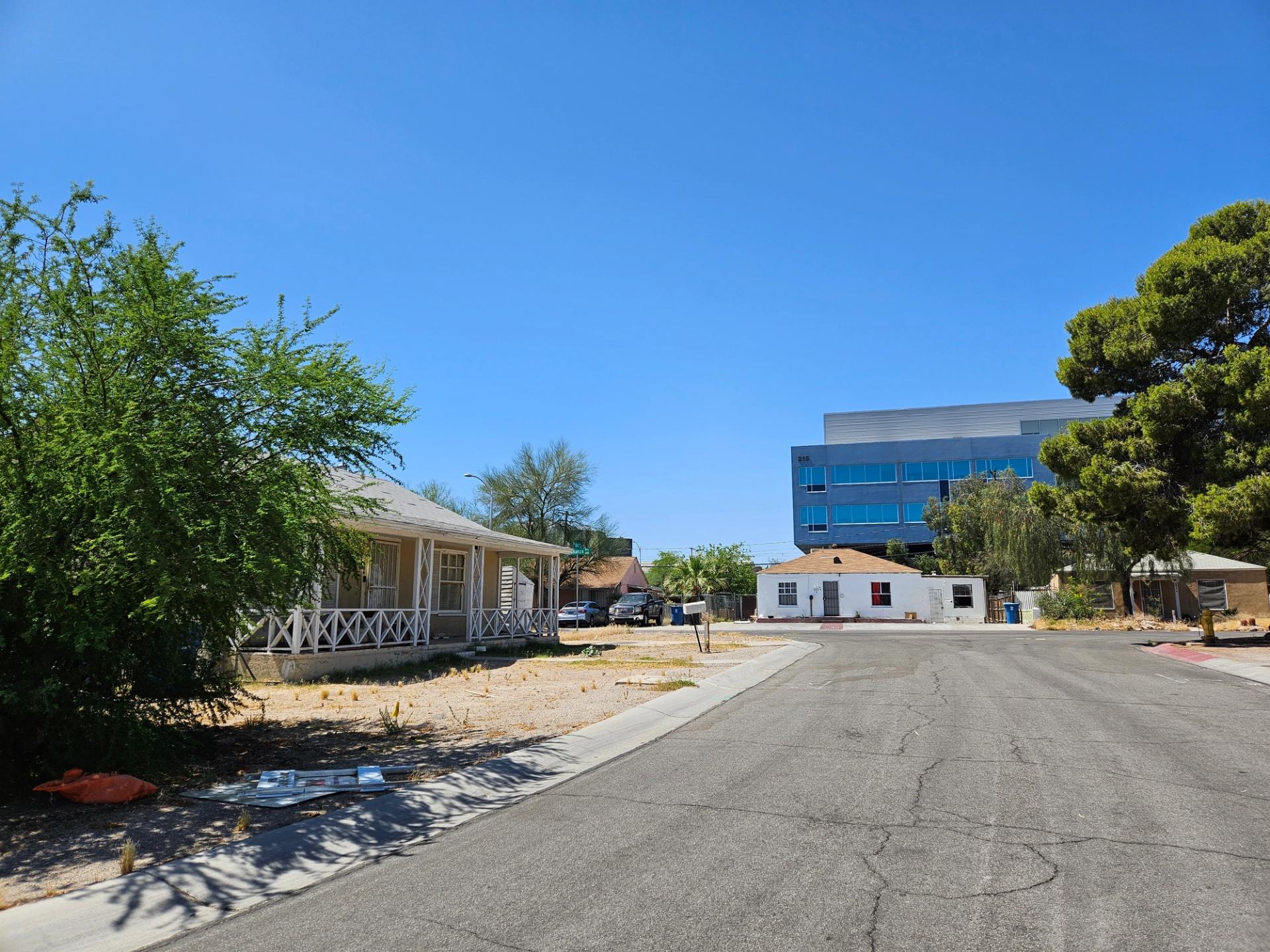
It’s easy to drive past the Biltmore Bungalows and not realize their historic relevance. The quiet, unassuming single-story ranch and cottage homes are rugged and worn-in, but played a pivotal role in the development of Las Vegas as a city.
Born of the War
The need for military housing emerged in 1941, when the facility now known as Nellis Air Force Base opened as the Las Vegas Army Airfield. Suddenly, the United States was in World War II and operations here dramatically increased throughout the decade. Hundreds of homes were federally financed with military workers in mind.
What’s in a Name?
The Biltmore neighborhood (also referred to as Biltmore Village, Biltmore Estates, or the Biltmore Bungalows) was created in 1942 to meet that demand with two plots of land on either side of Las Vegas Boulevard, just north of Bonanza. The name was borrowed from the nearby Nevada Biltmore Hotel, which followed a motor lodge format and was renamed the Shamrock Hotel before it closed in 1953.
Decades Later
Today, the Biltmore homes are a gritty working-class enclave that saw most of Downtown develop around it over the past 80 years. The neighborhood is known for tight, curved roads, and uniquely shaped lots. It’s not uncommon for front yards to vary in size — an aesthetic choice to avoid a cookie-cutter feel. The annex to the east of Las Vegas Boulevard has a more conventional layout.
Things To Do
Almost by coincidence, the Biltmore area is part of Las Vegas Boulevard’s “Cultural Corridor,” which includes the Neon Museum, Old Las Vegas Mormon Fort State Park, and the Las Vegas Natural History Museum. A hand-painted mural on 1st Street is the only visible acknowledgement of the Biltmore legacy. The neighborhood is a stop on the Pioneer Trail, a free self-guided driving tour of historic locations in Las Vegas, so use it as a starting point to learn more about our fascinating city.