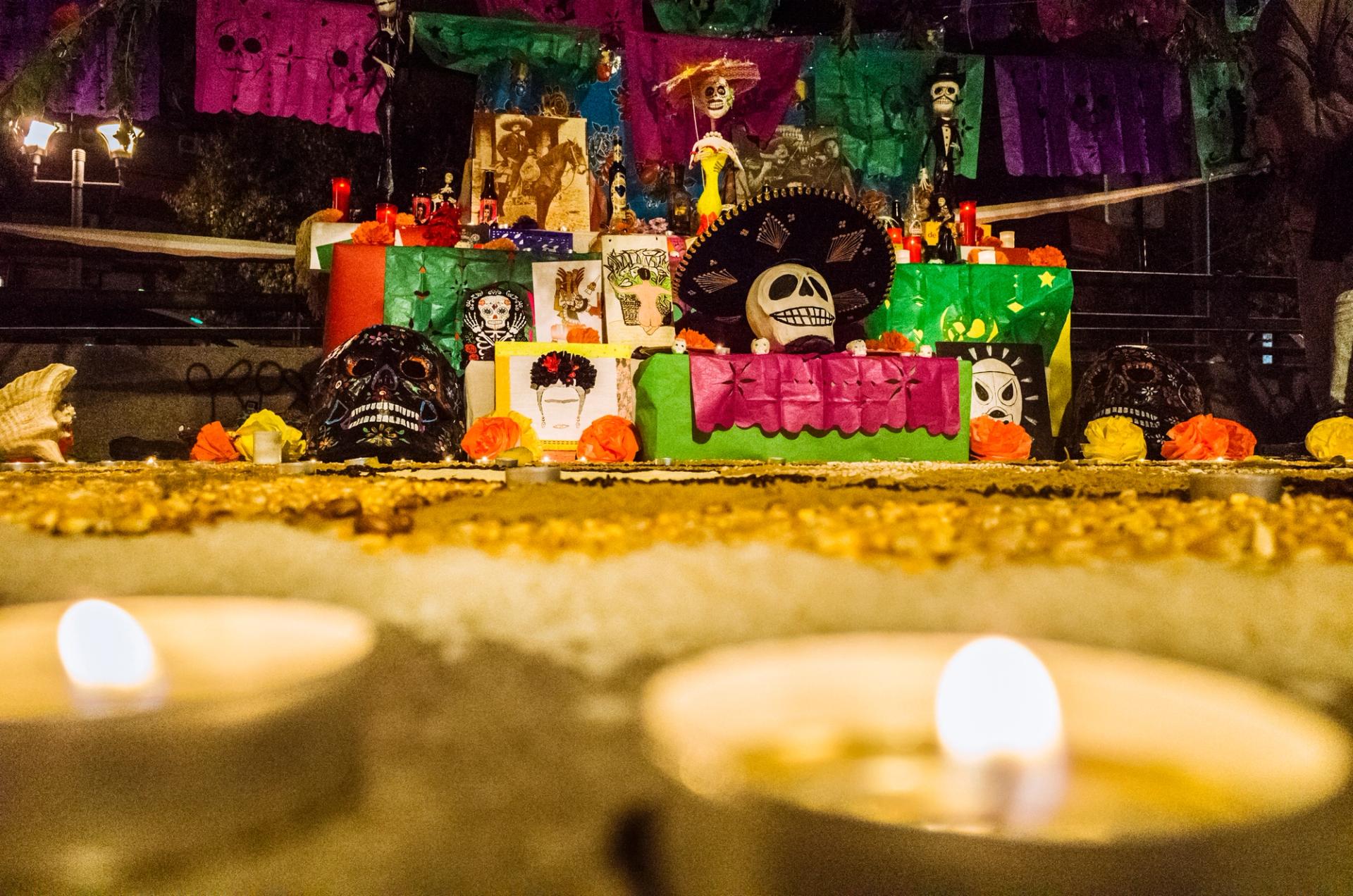
The Indigenous people of what is now modern-day Mexico practiced Día de los Muertos, or Day of the Dead, as a celebration of the lives of loved ones who passed on to the afterlife and as a time to reunite with their spirits. It has been observed throughout Mexico and in parts of Latin America as a multiple-day tradition where families gather at cemeteries and homes to honor the dead through various rituals and customs. Thousands of years later, this tradition is now celebrated globally, primarily on Nov. 1 and 2. (Locally, events go until Nov. 5; see below.)
Common Elements
Altar: An area decorated with photos of loved ones who have passed, flowers, photos, candles, and food, all meant to represent the four elements, earth, water, air, fire.
Cempasúchil: Marigold flowers used at altars, tombs, and graves, its strong scent meant to guide the souls of the dead.
Calaca: A decorative skeleton.
Calavara poems: Short, funny poems framed as comic epitaphs for the still-living.
Catrina: The stylized skull originally created by Mexican artist José Guadalupe Posada.
Ofrenda: An “offering” like “pan de muerto,” sugar skulls, fruits, and other food.
Pan de Muerto: Mexican sweet bread used as an “ofrenda.” Although recipes can vary, pre-Hispanic cultures had a "papalotlaxcalli," or butterfly bread, dedicated to this type of ceremony.
Papel Picado: Mexican folk art made by cutting intricate designs into tissue paper and hanging them with a string. It is meant to symbolize the wind.
Where to Celebrate
There are Day of the Dead festivals planned for the Winchester Dondero Cultural Center, at Springs Preserve, and at the Sammy Davis Jr. Festival Plaza in Lorenzi Park.