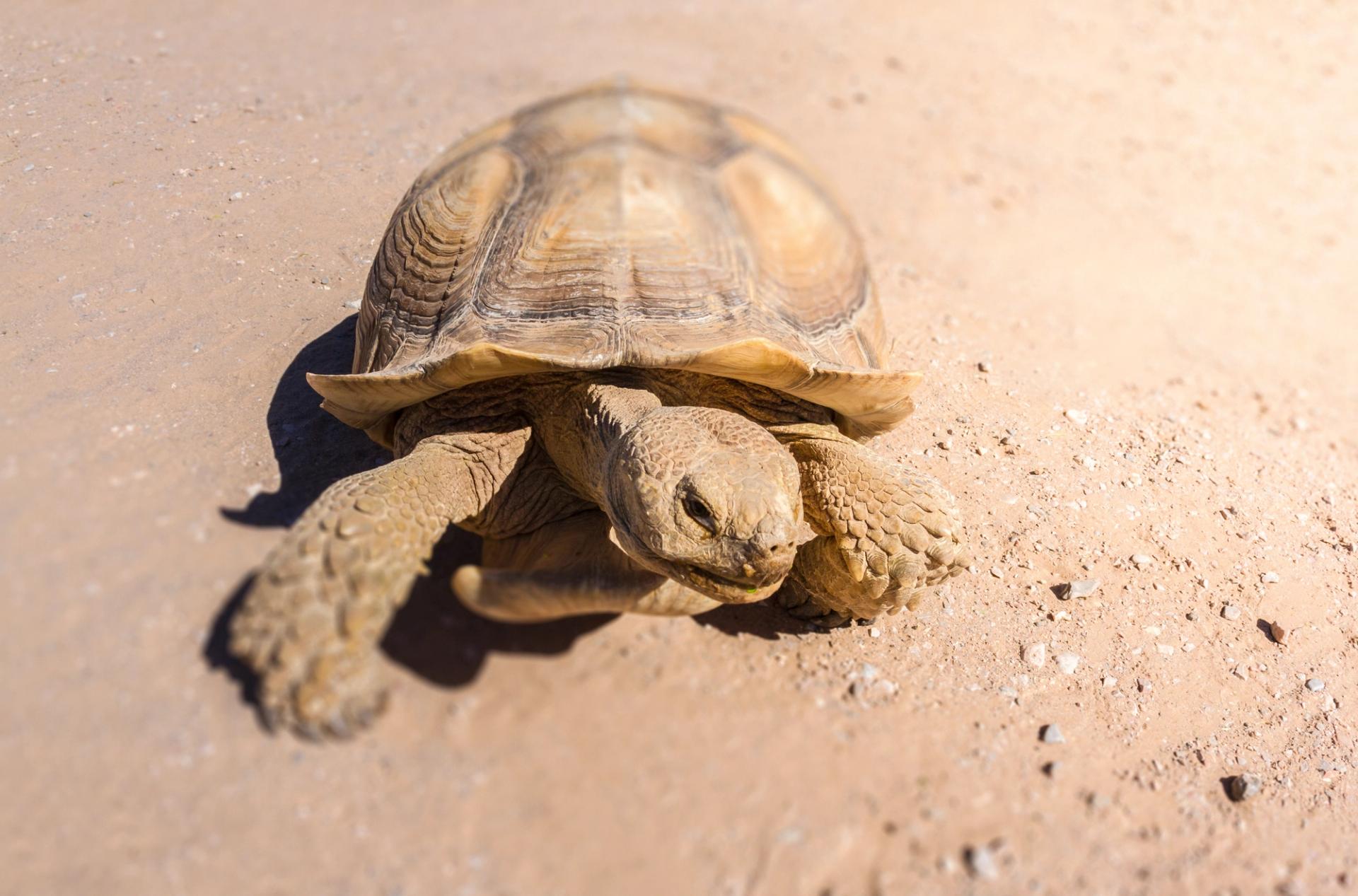
Desert tortoises spend 90 percent of their lives in underground burrows, where the temperature is more stable. Expect to see more activity in spring as desert tortoises (including Mojave Max at the Springs Preserve) emerge from their dwellings and explore Nevada’s landscapes. Wildlife biologist Beth Wolff shares some thoughts on what to do if you spot one.
What should I do if I see a desert tortoise in the road? Should I pick it up?
“If you can safely get the tortoise from the middle of the pavement to the shoulder or a little bit off into the vegetation, that's a great thing to do because road strikes are one of the biggest threats to desert tortoises. But definitely look out for your own safety first.”
I've heard that you have to keep them moving in the direction they were going in or they'll be lost forever. Is that true?
“They won't be lost forever, but that's generally the right thing to do. If you see a tortoise on the side of the road – on the vegetated shoulder – you should just leave it alone. They’re actually drawn to the vegetation on the shoulders of roadways. There's more water there. Sometimes there's weeds. So they do tend to walk right on the side of the road, which can be alarming.”
I've also heard they pee when you pick them up. Is that true?
“Sometimes they do if they're really stressed. Tortoises retain their urine, sometimes for a year or more in times of drought. So one of their stress responses is to void their bladder (when) in danger, but they don't do it very easily. You really have to harass a tortoise to void its bladder, so don't let that be your primary concern.”
- Listen to the full conversation between City Cast Las Vegas co-host Sarah Lohman and Beth Wolff. [City Cast Las Vegas 🎧]