
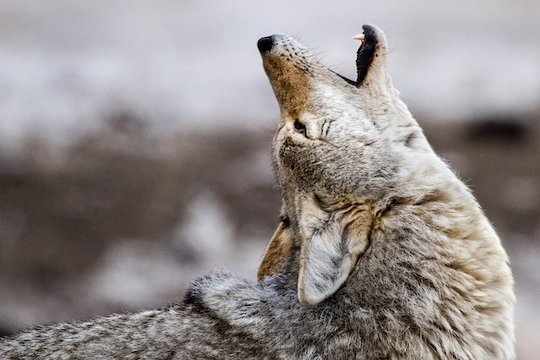
Prompted by video last week of a coyote pack trotting merrily along a Henderson street — to say nothing of mountain lion sightings in edge-of-town neighborhoods — we talked to an expert in the human-wildlife interface:
Do some of the mid-size or smaller carnivores — coyotes, in particular — pose much of a threat?
If you are an adult or medium- to large-sized dog, for the most part a healthy, solitary coyote, or something smaller, like a fox or raccoon, is not going to mess with you. If you are a small child or a small dog or house cat, you might be more at risk. In groups, coyotes might be more bold, especially to solitary animals. If an animal is not showing signs of aggression, the best attitude is rational caution: Enjoy them from a distance, and, especially, don't feed them.
Does living in proximity to human populations change these carnivores over time?
The short answer is "Yes!" How it changes them depends on many factors. Coyotes, like other canids, are very adaptable. They can become less wary of humans and will often disregard human presence as they go about their business, especially if you don't bother them (a recent post on social media of a coyote on someone's car comes to mind). Animals may even begin to associate people with food if trash or pet food is left outside.
Just to get a little nerdy: Wolves started hanging around humans 10,000 years ago, and now we have chihuahuas! So certainly the long-term possibilities are endless ...
"The coyotes were here first; humans are the interlopers." What do you think when someone says that?
Well, they aren't wrong ... but I also don't think we are going to leave. So the next best thing would be to figure out how we can both enjoy Las Vegas together!