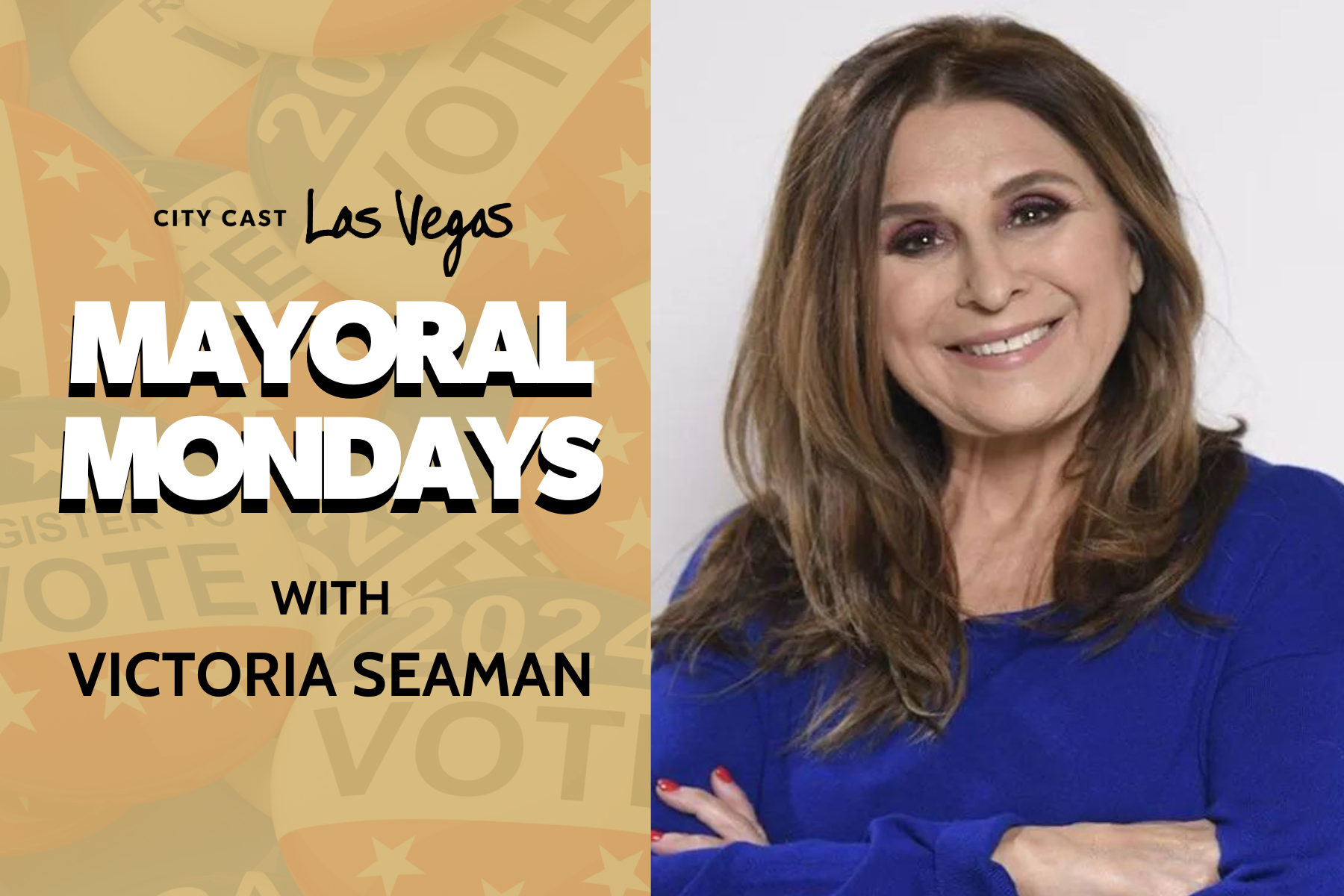
Early voting for the upcoming primary election is right around the corner — it starts on May 25th — and while only about a third of the valley can vote for the mayor of Las Vegas (here’s why), it matters for all of us. In our latest episode of Mayoral Mondays, co-host Dayvid Figler sits down with mayoral candidate Victoria Seaman. Victoria is a UNLV alum and former businesswoman who was elected to the Las Vegas City Council in 2019, where she has represented Ward 2 since. We chat about her stance on the Badlands lawsuits, her advocacy for animals, and how her two personal lawsuits against the city influence her views on safety and transparency.
We’re on social media! Follow us @CityCastVegas on Instagram. You can also call or text us at 702-514-0719.
Want some more Las Vegas news? Then make sure to sign up for our morning newsletter here.
Learn more about your ad choices. Visit megaphone.fm/adchoices.
Want to follow along while you listen? Here's the episode transcript.
Disclaimer: This transcript was auto-generated. Please excuse any typos or confusion.
Dayvid: As more money is spent on advertising and more polling gets done, three front runners have emerged in the Las Vegas mayoral race, and we're talking all three of them.
Not just about what they would do as mayor, but why who becomes mayor is important to everyone. anyone interested in the future of our valley. Today on CityCast Las Vegas, our special series Mayoral Mondays continues with mayoral candidate Victoria Seaman. She's been in Nevada since 2005 and served one term in the Nevada Assembly.
In 2019, she began representing Ward 2 on the Las Vegas City Council and and touts this experience and her background as an entrepreneur. We get her take on the big judgment the city is facing over the Badlands Golf Course, what the city has and hasn't done with homelessness, and how her experience of personally suing the city twice will shape perceptions as she vies to be Las Vegas most visible ambassador.
Quick note, this episode was recorded on April 15th, days before the latest Badlands development ruling, which went against the city. It's Monday, May 13th. I'm David Figler, and here's what Las Vegas is talking about.
Victoria Seaman, welcome to CityCast Las Vegas.
Victoria: Thank you so much for having me.
Dayvid: Well, it's our pleasure to have all of our candidates on, because it's an important race. I certainly live in the city, so it's important to me.
So, it has been said that the mayor of Las Vegas is just one vote on a council of seven, and you've already had a vote there since 2019. So, why go for mayor now?
Victoria: Well, it is not just another vote. It's actually taking on a more of a leadership role where you will be appointing people to the different committees. And those committees are very important. I'll give you an example. The Fiscal Affairs Committee, where we, uh, sit on the board for Metro and other items that concern the budget.
Um, we have committees, uh, For transportation. So we kind of have a voice everywhere and being the leader is being able to more advocate for other issues.
Dayvid: Okay, now you are one of two candidates who are currently on the City Council. What do you bring that, say, your fellow councilperson and mayoral candidate, Cedric Creer, doesn't?
Victoria: So, I would like to say first of all, um, I love my colleague, Cedric Crear. He's an amazing, uh, Councilman. Um, we're very different in that I, you know, decided to use this position as City Council to really go out and lead, like I was explaining, to be a leader in certain issues. I've taken on anti human trafficking.
I go out and support local businesses with, uh, highlighting them on my social media every week. Um, I think that this is a job that I've taken on full time and really, uh, put residents first and take it to heart. And so I think my colleague does an amazing job, but I think that I've taken it a step further with everything that I've done since I've been on city council.
I won't kick the can down the road on issues that need to be addressed. I've done that since I've been on the City Council. I will continue to do that because I believe that as a public servant, it is my job to address issues, even if they're not popular.
Dayvid: from your perspective, what is your greatest accomplishment as a city councilperson for the city of Las Vegas so far?
Victoria: Well, I think there are a few, and I think one of the things that I've brought to the table is letting people know that your voice matters. I've, uh, taken the lead on quite a few issues, one of them being the Animal Foundation. I'm kind of well known for addressing a decades old issue that nobody wanted to address.
and being able to bring real changes and multi jurisdictional changes that no one else has been able to do. It took me two years, but I was able to get those votes for an audit and able to now When the contract is coming up in 2025, make major changes and bringing all the jurisdictions together to do so. That
Dayvid: Oh, I just want to follow up on that really quickly. So that is, uh, eventually going to be open for bid to see who is going to run, uh, what's essentially the main animal shelter for the city's
Victoria: is correct. It will be a request for proposal. We will have it ready to go out probably by mid 2024. And we're very excited about being able to work with someone, whether it be the Same people or other people with contracts that are going to give all of us oversight, something that we haven't seen in decades and really, um, you know, make a difference for our animal.
Dayvid: Alright, well I want to move on to some of the other issues that have come up during this race. certainly the Badlands dispute has become way oversized. I mean, it's about 250 million in counting and has dragged out for years. You've been the strongest voice for giving up the appeals and just settling it.
So let me ask you this. How much do you think would be a fair settlement of the Badlands dispute? And where would that money come from?
Victoria: So, This is an issue that I inherited and I have been fighting before there were any judgments to the city. It was already in court when I got elected, but we had no judgments at that time. That it would be better to come to the table and settle this. However, there were people still on the council that had issues.
I voted against the developer, so it was really hard to bring people together and try to settle this matter. But I pursued and was persistent for years saying that if we don't settle this, we could lose and it would be on the floor. Taxpayer dollar. And sure enough, uh, we lost one case after another, and I have continued to say that I will not support outside attorneys.
We have several attorneys in house, and so not only have we, uh, received judgments against us, but we've spent millions of dollars in outside attorney fees. So, at this point, you're right, it's close to 280 million, though, with interest. And it will come out of the taxpayers dollars. And I don't know at this point if it'll get settled.
It should have been settled. It should have never happened. Part of the reason I'm running for mayor is because I believe that We need strong leadership that we don't end up in situations like Badlands. This is a very bad situation and um, I would have advocated in really making sure that the council was educated to know when they were voting on something of this caliber what consequences could be.
Dayvid: Yeah, so what happens if you were to become the mayor? What's the, uh, next steps and how do you look at what city services might suffer if the city has to take a big hit?
Victoria: Well, once again, you know, we, You know, we have to wait for the court now to decide. It's not in anybody's hands except the court again. You know, up until the last moments, I was trying to get this settled to come to the table. Um, but at this point, the court is going to decide. We do have some reserves.
We do have some ideas. If it, If, if we do not succeed in the appeals, um, you know, there are options and, um, we'll just have to wait to see what happens, but, you know, there are options.
Dayvid: What's the best option?
Victoria: Well, the best option is that we, we win, but, um, if we don't win, um, there are options. We will probably end up with the land.
We'll have to sell it and, um, we have some reserves, but this is all depending on what happens in the courts.
Dayvid: Okay, We'll move on to another issue because a lot of people do cite homelessness as one of their top issues in this race and you've been on the council for a while now and I think you agree. It's a Remains a huge challenge between 2022 and 2023 alone. The homeless population in the valley has grown by 16%.
why has the city council been falling short these years? And how is mayor? Will you be more effective?
Victoria: So. I don't know if I want to say the city's fallen short because I think the city's done, uh, quite a bit. we are the ones that, uh, built the corridor of hope, which takes in people from county and all other jurisdictions. We were, um, At that time, this was right before I got elected, we're trying to replicate the Haven for Hope in San Antonio as a shelter and a resource to help those unhoused.
I think we've done a fabulous job. When I first got elected and toured the newly, uh, Corridor of Hope, I was kind of appalled, um, but we've put so much resources in over the last few years, and I toured it not too long ago, and I find it To be a great place for people to go that are unhoused to get resources to get back on their feet Um, we've done an amazing job.
We have the recruitment center and this is stuff that the city alone has done Um, you don't see this in the county. This is a Governor Lombardo is trying to replicate the Haven for Hope with the public private partnership, uh, with the casinos. And I was able to go on their, uh, delegation tour, uh, about a year ago to San Antonio and I've been in a few of their meetings.
And it's amazing. It's kind of replicating what we did in trying to replicate the Haven for Hope and I'm really excited about the project because they are moving forward. It's going to get built. It is going to, um, continue to bring those resources that are needed. So I'm really excited about that and I think, um, that it was a good thing that the city did and, you know, being at the forefront of it.
And then having the camping ban. A lot of people did not understand how great the camping ban is because it gives us the ability, not only to, uh, save businesses from closing down. We had businesses come to us and say that they weren't going to survive because they had a lot of homeless people and house people camping in front of their places of business.
So we were able to enact the camping ban, which means you can't camp out on public private property. However, We can send our more teams out and get those folks resources. Now, they don't have to go to the Corridor of Hope, they don't have to take the resources, but it gave us the ability to offer those services.
I'm a huge advocate for mental health and recovery. Those I think are the root issues of most of the unhoused and I've gone in the tunnels. I've spoken to people We cannot force people to get help. There are people that just don't want to leave living on the street But for those that do we have resources.
I think the city's done an amazing job I will continue to to make sure that we're taking care of the mental health and recovery issues and Doing whatever we can to help people get off the street
Dayvid: Now? Certainly you have heard some of the criticisms, even of the Homeless Courtyard Resource Center, that it's an open air shelter, that people are basically sleeping on the ground there with the exposure to the elements, and that if you go down there by Foremaster and Las Vegas Boulevard, where it's located, you see tons of people still camping outside who don't want to go in or aren't using that facility because it doesn't offer what it should to them from their perspective.
You probably have also heard the criticism that it's inhumane to Threaten or arrest people simply because they don't have the economic ability to Um, So, what would you do differently,as mayor to, you know, get people into homes if that's what seems to work the best?
Victoria: Well, the big issue is the affordable and workforce housing. But once again, you know, I think when we're out in the field and trying to bring people in for resources and, and by the way, I don't know if you've toured the corridor, but, uh, I did recently. And, uh, I think it's, it's amazing. It's a great place to help people.
There are also other resources for people to stay at. I've toured the Salvation Army. There's so many, We're trying to encourage people that were in the past. We have several places, and then we have crossroads in different places that will bring people in for recovery, and then there's housing after that.
So we are trying to work on every level of bringing people in together. For whatever their needs are. And I will continue to do that, but affordable housing and workforce housing is number one on things that we need to start doing. And it starts with getting our federal government and our federal delegates.
To get some of that land released. Here in Nevada, over 80% of our lands are owned by the federal government, and I was so glad to hear Governor Lombardo, that is urging the federal government. I've been to Washington DC with the city delegates and we understand how important it is and to incentivize those who are building.
to do affordable housing with whatever we can. So I will make sure that stays a priority for me. And, uh, it's, it's important that we, we do this as soon as possible.
MUSIC
Dayvid: Now, we just, we just pivoted there to affordable housing, so I want to follow up on that. But much of the federal land, as far as it relates to Las Vegas, there isn't a lot available. I mean, Las Vegas is virtually landlocked when it comes to, new areas to develop. So that doesn't really help the city of Las Vegas.
Maybe if, if we're going to switch to, affordable housing, uh, I know you have some ideas, uh, about how we could, uh, incentivize more affordable housing to be built here in Las Vegas. So maybe you could tell us about
Victoria: Yeah. Well, no, uh, releasing federal land will help us because we will be able to, um, get this to developers and incentivize them to work with us on affordable housing. So, uh, we are landlocked and we shouldn't be landlocked and we need to start getting some of that land. And that's something I recently, um, heard the governor urging our federal delegates to work on. Um, so.
Dayvid: So, I'm sorry, Councilwoman, would you mean that you would try to get the city to access areas that are BLM that wouldn't be in the city right now? Or somehow develop areas that are undevelopable?
Victoria: No, there's plenty of areas that are annexed into the city that we do get, and we should be able to get more of that. Yes, absolutely.
Dayvid: what land right now that is BLM controlled is in the city limits that you could do reasonable development on?
Victoria: are plenty of areas that are annexed into the city and auctioned off for development, um, if you know anything about the things that we're doing at the city, but I'm also going to talk about incentives to developers to encourage construction of affordable housing units. There's density bonuses, there's tax breaks, there's expedited permitting, there's fee waivers.
Another option is the public private partnerships, um, to leverage resources and expertise in housing development. I mean, there's so many things besides that. Federal land that we could be doing. But as you said, we're landlocked. So yes, we can be working with our delegates and getting more land annexed into the County and into the City.
And the County can do the same as far as incentivizing builders.
Dayvid: Is the city prepared to do infrastructure extensions to new or remote areas?
Victoria: We constantly do that. Absolutely.
Dayvid: I'm thinking now to just maybe change to, because it's all related of course, uh, traffic and construction, uh, within the city. I'm sure you hear it plenty that it has been pretty rough. I mean, I'm thinking about the never ending disruption on Charleston as one of my prime examples that I see all the time.
Uh, obviously there's others. Uh, to the extent that the city has control of traffic and transportation strategies, what should the future look like for the city of Las Vegas? And as mayor, what would you do for
Victoria: Well, I hear people's concerns. Work has to be done, but it can be done, um, more strategically, where we don't have cones when people are not working, for example. I'm sure you've seen that. So, and that is a concern. So that would require working with building and safety. I mean, infrastructure at the city level and making sure that we're doing everything we can to make sure that we are being strategic about what we're doing.
We also have a program for zero fatality, um, that we, We got a federal grant for because as you probably know, um, there's been a big increase in fatalities in dry, in uh, automobile accidents and it is something that we're really concerned about at this point.
Dayvid: What do you think is the number one solve for, uh, lowering traffic fatalities?
Victoria: Well, recently they took, uh, Traffic violations to civil infractions and just speaking with Metro about it, I asked them if they believed that that was part of the problem and they do because it's really not, you know, accountability is just not there and people run through red lights, you know, there's so many DUIs.
I'm sure you read about it in the paper that, you know, the person who just You know, had a fatality in a DUI, was arrested a year or two ago. So I think that we need more accountability to those, uh, drivers that are causing fatalities.
Dayvid: Mm. yeah. For clarification, DUIs have not been criminalized. That's still a criminal
Victoria: No, well,
Dayvid: as are a number
Victoria: except, you know, the accountability just sometimes isn't there.
Dayvid: What about making the streets safer, narrower, make it so people can't drive as fast as they often do when they have those big open
Victoria: Yeah, these are things that we're discussing now and we're looking at through our traffic department and our public safety in ways that we can prevent, uh, fatalities because it's, it's just increased so much.
Dayvid: Now I've heard, The idea of light rail, uh, for the city being bandied about, I know other projects maybe have fallen aside. What is the status of light rail as a city of Las Vegas
Victoria: Well, I think, you know, again, we should do more than just talk about it. I think it's really important for our city. I think we need to, to take a bigger step at making sure that we are having the public transportation that we need. Um, I also love what, uh, they're doing with the tunnels, uh, and the, and I hope they'll expand the tunnels.
The, uh, uh, I went blank on the name really quick, uh, our tunnels.
Dayvid: Are you talking about the boring tunnels? The
Victoria: The boring tunnels. I think that will help a lot. I think the light rail, anything that we can do to increase public transportation is, is number one on my priority.
Dayvid: So,The boring tunnels have been in the news a lot lately, and you know, they haven't started in the city of Las Vegas yet. As mayor, how would you hold them accountable for safety concerns, for environmental concerns, for anything else that might come from this very new strategy?
Victoria: Well, and, and we need to hold everybody accountable, you know, and so we will definitely hold them accountable. I think they're doing a phenomenal job right now and I look forward to them moving forward to the city.
Dayvid: Do you, do you think that, um, having underground Teslas in a single file that holds maybe three or four passengers at tops that have to have a driver in it is really an effective public transportation
Victoria: I do. I think it'll take a lot of people off the street driving. I think, um, carpooling with Ubers are helping with our transportation. I think any sort of public transportation, any, is going to help.
Now, the history of, let's just say animosity between the city and county governments, uh, has become pretty legendary. Tell, tell me about the rift and how you'd get the city of Las Vegas as mayor to work with the county a lot
Well, I'm already working with the county, so that's a very interesting question, because when I got elected, I heard about the Rift, um, and I, um, Maybe could sense a little bit of it, but since I've been elected, um, people like, um, Commissioner Kirkpatrick, I worked with in the state legislature. Um, I have very good relationships.
Um, I've had people call me from all over the Valley that have needed help in the County and I'll call their County Commissioner and not only will I send them there, but I'll also go there because I believe that it is important to have relationships. with all of your counterparts. I have a very good relationship with Mayor Pamela Goins.
I have a very good relationship with Mayor Henderson and several of my county commissioners. I haven't worked with them all, but I try to have that relationship with them. Because I think it's important, if we work together, we're going to get things done.
Dayvid: Well, a lot of times it does come down to control of funding, uh, and one of the prime examples, I think, between the county and the city is, is the way that social service money gets allocated, uh, especially for, uh, that supportive housing that you talked about before. I know that the county has specifically, uh, tried to do projects in the city limits.
And the city has pushed back, um, and that they do have some in the county and the city isn't participating. Is that a bad thing that you can, uh, approach or, or tackle to maybe eliminate?
Victoria: I've always said, if you don't care who gets credit, you can get things done. And I think it is so important. It's ultra important to work with our counterparts for the people of Southern Nevada.
Dayvid: So do you think that if, um, county projects are proposed, uh, for the city and the city doesn't like them, that they should sort of, in the spirit of cooperation, like with these transitional housing and things of that nature, um, move
Victoria: Absolutely. I mean, we, we need to work together.
Dayvid: as a city council person, you, you've sued the city twice. do you think that whatever grievances you may have had are outweighed by the bad look of a council person suing their own city?
Victoria: of all, um, we, I did not, I mean, I sued the city in order to get policy changes. So, we are getting policy changes or I'm running for mayor to hold accountable on bad policy and I think it's very important for the constituents out there to know that I will always have their back and that everybody at City Hall should feel safe.
Dayvid: For our listeners who might not be, in tuned with it, can you tell us what, what are the circumstances of the two occasions that you sued the city? And then you could talk about what policy changes have been made.
Victoria: So, I had an accident, um, when I got out of the legislature where I was bedridden for a month, and I didn't sue the city. They were brought into it because they contracted with an entity that had left, uh, cones open in a lane, and my husband and I almost died. Um, so the city, um,
Dayvid: a traffic thing directly
Victoria: yes, absolutely. So when people complain about cones, I always say, well, you know, you're grateful we do put cones because there were no cones in the lane that my husband and I went into at 45 miles an hour.
And I need to tell you this, Um, the city was not the entity that we were suing. They were brought in just because they contracted, um, the people that were responsible for the cones. That was one. The second one was the destruction of a video and evidence and being attacked by a former councilwoman. And what I asked them to do was change the policy, um, Um, It wasn't, it's still ongoing, so I don't, can't talk too much about it.
But what I can tell you is this, one of the reasons I'm running for mayor is because we need transparency at City Hall. No elected or city employee or anyone for that matter should ever be allowed to attack someone and evidence is destroyed without an investigation. My, uh, current lawsuit that I can't talk too much about is for a policy change only.
This will go away if they change the policy and that we don't have city attorneys who destroy evidence.
Dayvid: So this is a policy from your perspective involving transparency and the accessibility of documentation of what
Victoria: Yeah, I just want, I want everybody to feel safe in their place of work. Um, if, because I'm elected would, does not allow me not to be protected from other elected officials. And really, that's all I can say about it. But, um, yeah, that's it.
Dayvid: Alright, well let's move into some fun questions for you to end this off. your campaign Is taking you all around the city. So tell me, what's your favorite new place or new to you place in Las Vegas that you've discovered while on the campaign trail,
Victoria: New place, do you mean in food or
Dayvid: whatever, just something that's either new or new to you that you didn't know
Victoria: You know, because I do small business every day. Saturday. I learn about small businesses every single day in our city in my ward that I did not know about. And there's a new Ninja HQ by the wonderful V and I forgot the guy's name. But anyway, it's right in Ward 2 on Sahara. I just did an interview with them.
And it's a magical place where adults or children alike can zip line. They can go, um, to hidden caves. They can, just a fun place to be. Chad and Vee, the famous, uh, YouTubers. That's who it is.
Dayvid: and so that is, uh, Spy Ninjas HQ
Victoria: Oh, it's just amazing. I mean, like I said, they have, uh, you can, you know, uh, go into these rooms where you try to get out. It's just amazing. An amazing place.
Dayvid: And it's right in Ward 2 on Sahara. Um, wonderful restaurants opening. Ones that have been around that I've discovered. Um, so, there's just so many wonderful new and exciting places. New and exciting for me, uh, but probably have been around for a while.
Okay. And the last one, as mayor, you could pretty much summon anyone you want for a long lunch. Who is the first person that you would ring up to have a long talk about the pulse of the city of Las Vegas?
someone not named Goodman who you would have that long pulse of the city of Las Vegas conversation with. One
Victoria: I, That's unfair. I can't think of one person. There are so many people that have a pulse on Las Vegas and I, not one directly comes to mind. I mean, I'm going to sit down with Lombardo, even though I know him and he's a friend, I want to sit down with him and say, what can we do together?
to build our state and our city. And again, he was my neighbor. I'm a friend. I can go have lunch with him, but I want to talk to him as a mayor and governor and say, what can I do to help? What can we do together? How do we make, put Nevada on the map?
Dayvid: And, and in fairness, Uh, you picked somebody who is indeed a resident of the city of Las Vegas, so good job there. All right. Well, Victoria Seaman, thank you so much for joining us here today on CityCast Las Vegas.
Victoria: Thank you. Appreciate it.
Dayvid: And that's all for today here on CityCast Las Vegas. If you enjoyed the show, hey, go tell a friend, rate our show, leave us a review, and subscribe to our indispensable morning newsletter where we'll be following the mayoral race. We'll be back tomorrow morning with more news from around the city. Till then, everybody stay lucky.